The idea
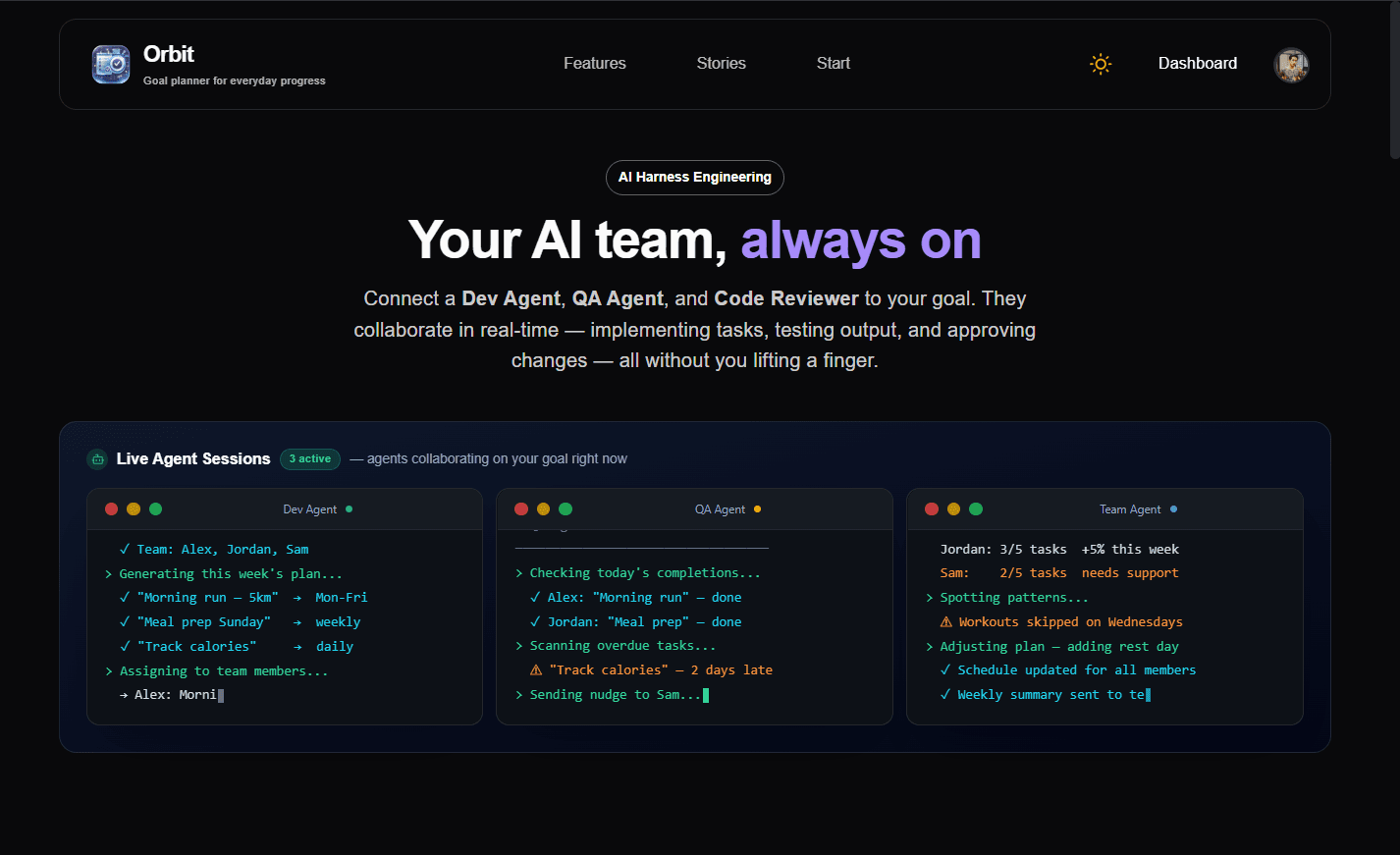
Most AI tooling treats the model as a faster autocomplete. This platform treats agents as digital teammates. A human writes the goal, and a team of specialized agents plans the work, splits it into tasks, executes in parallel, and reports back.
Architecture
The system is built around three planes:
- Orchestration plane. A planner agent decomposes goals into a task graph. Worker agents claim tasks, negotiate dependencies, and hand off artifacts through a shared memory store.
- Communication plane. Agents talk over a structured message bus. Every message is typed (proposal, review, handoff, block) so the orchestrator can reason about conversation state instead of parsing prose.
- Tool plane. MCP servers expose repositories, databases, browsers, and deployment targets as capabilities. Agents discover tools at runtime rather than being hardcoded against them.
What was hard
Long-running autonomy fails quietly. The interesting engineering was not prompting, it was supervision: heartbeat checks on stalled agents, budget ceilings per task, and checkpoint diffs a human can approve from a phone. AFK development only works when the system knows when to stop and ask.
Memory
Agents share a layered memory: ephemeral scratch per task, project memory in Postgres with vector search, and durable "lessons" that survive across projects. Retrieval is scoped by task graph position, so an agent working on the billing service never pollutes its context with frontend notes.
Status
This is my biggest current focus. The platform already runs multi-agent builds end to end, and each iteration moves more of the software lifecycle from human hands to supervised agent teams.